Posts

Showing posts with the label pacman

What does the PACMAN say?
Image
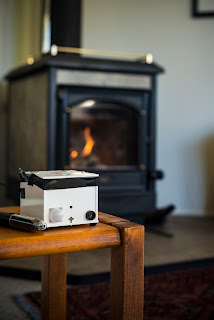
Our keen tinkerer, Gustavo Olivares, started building the first PACMAN back in 2012, I think. We wanted a device that could not just measure indoor particle levels, but would give some clues as to what was causing and controlling them. After 3 years of tests it was not until last year in Rangiora that we finally got around to using PACMAN for the job it was originally intended. Observing rapid changes in particle levels in real homes in a wood-burning setting. The PACMAN technology is low cost and they are each custom-built by amateurs (we are air quality scientists not electronic engineers). Some of them failed, some reported data that was 'contaminated' (by what, we're not yet sure). But some worked beautifully and did exactly what we wanted. Here's an image of a PACMAN in action. This is real data from one of our participant homes, covering one day. You can see three lines which are levels of measured dust, carbon dioxide and outdoor particle levels (PM10) measured b...

We put a PACMAN on someone's home but we weren't ready for what happened next ...

Image
Actually we were ... we got lots of data and that's what we wanted (sorry for the clickbait title ... a scientist has to have some fun right? ) Now in all seriousness, we were very pleased with the data from the first two weeks of PACMAN deployment in Rangiora. They allow us to test the units in a real world  setup outside of the researchers' control and evaluate whether the data we get from them can tell us something useful about the exposure of the people inside to particulate matter. Let's look at data from one unit PACMAN_17 and what it can tell us about the home it was living it. Temperature The PACMAN has an internal temperature sensor within its real time clock to keep it accurate. This is not quite room temperature  but it approximates it pretty well. See a comparison below between the temperature closest to the wood burner stack (BRANZ logger) and the internal PACMAN temperature. Not bad right! However, the same issue that I mentioned before remains ... it is not...

Waka Waka Waka Waka

Image
Here is PACMAN in its native environment One of the key pieces of hardware we're deploying in this campaign is our PACMAN ( Particles, Activity and Context Measurement Autonomous Node ) ... not this pac-man . This little unit is capable of logging air quality parameters (dust concentrations, $CO_2$, $CO$), activity information (motion, distance to closest object) and context (time, temperature) every second. We expect to use this information to estimate what drives the indoor concentrations of dust in homes. All the participants that want to have instruments in their home will have one of these units installed but before we can do that we need to test if they are working as expected. So, we set them up in a bench facing a wall for a few days and as it is normal with experimental technology, not all of them worked perfectly but most of them did so we are go for PACMAN deployment. If you're curious as to what the data looks like ... here is a link to the test results of one of...